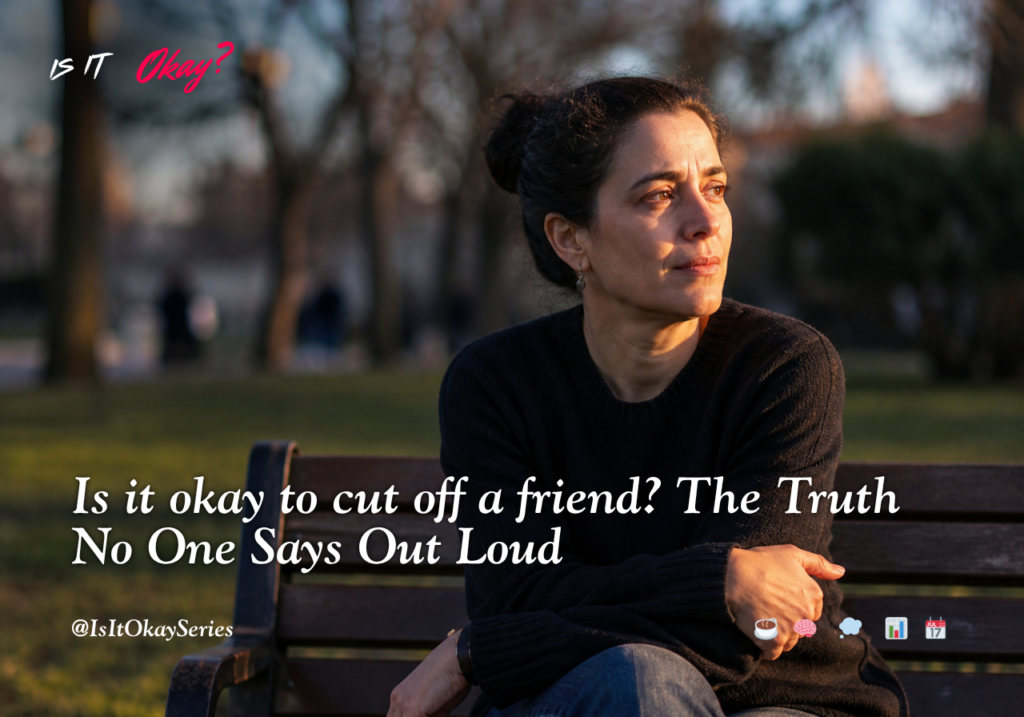

The Quiet Breaking Point
You don’t suddenly decide to walk away from someone you once trusted.
It builds—slowly, quietly.
A comment that feels off. A moment that lingers longer than it should. A pattern you try to ignore but keeps repeating.
Then it hits you:
Is it okay to cut off a friend?
And instantly, guilt follows.
Because friendship is supposed to be unconditional. You’re told to stay loyal, to forgive, to be “the bigger person.”
But something feels different now.
You feel drained instead of supported.
You hesitate before replying.
You replay conversations in your head.
Now you’re stuck between two identities:
👉 The loyal friend you think you should be
👉 And the person who no longer feels okay staying
That tension doesn’t resolve itself.
⚡ Direct Answer
Yes, it is okay to cut off a friend if the relationship repeatedly harms your emotional well-being, boundaries, or self-respect. It becomes necessary when patterns don’t change despite communication. The first step is identifying whether this is a temporary conflict or a consistent emotional drain.
🧠 Why This Feels So Wrong
Cutting off a friend feels wrong because it challenges your identity.
You believe:
- “I’m loyal”
- “I don’t abandon people”
But now you want to leave.
That creates internal conflict—something studied and explained by the American Psychological Association.
And society reinforces it:
“Real friends stick through everything.”
“Friendship takes effort.”
But these ideas ignore context.
Not all friendships are healthy.
Not all relationships are meant to last.
⚠️ Emotional Truth
The guilt you feel is not proof you’re wrong.
It’s proof you were taught to stay—even when it hurts.
✅ Why It Is Okay to Cut Off a Friend
🔁 1. When the Pattern Keeps Repeating
One mistake is human.
A pattern is information.
If you constantly feel:
- Drained after conversations
- Ignored when expressing yourself
- Anxious before seeing them
That’s not friendship. That’s emotional imbalance.
“If it keeps hurting, it’s not confusion—it’s clarity.”
🧱 2. When Communication Changes Nothing
You tried explaining.
You gave chances.
Nothing changed.
At that point, staying becomes self-neglect.
This is often linked to poor emotional availability in relationships—a core factor that determines whether a connection can grow or not.
Being heard is not optional.
🌱 3. When You Outgrow the Dynamic
Growth changes compatibility.
You begin valuing:
- Boundaries
- Emotional maturity
- Accountability
But they stay the same.
This mismatch reflects broken healthy emotional connection patterns that slowly erode the friendship.
“Outgrowing someone is not betrayal—it’s evolution.”
🛑 4. When Your Self-Respect Is Compromised
If staying means:
- Staying silent
- Accepting disrespect
- Shrinking yourself
Then the cost is too high.
This situation often mirrors the emotional conflict in letting go of someone you still love.
“You don’t lose people. You lose misalignment.”
🛠️ What You Should Do (Practical Steps)
🧾 Step 1: Define the Pattern Clearly
Write behaviors—not emotions:
- “They dismiss my feelings”
- “They only reach out when they need something”
Clarity removes doubt.
⚖️ Step 2: Choose Your Distance Level
Not all endings need to be dramatic.
Options:
- Gradual distance
- Limited interaction
- Clear boundaries
- Full cutoff
🗣️ Step 3: Communicate (If Necessary)
Use direct language:
“This friendship doesn’t feel healthy for me anymore, and I need space.”
No over-explaining.
🧍 Step 4: Hold Your Boundary
Expect:
- Guilt
- Doubt
- Emotional pull
This is normal.
Consistency builds self-trust.
🔄 Step 5: Redirect Your Energy
Fill the gap intentionally:
- Invest in better relationships
- Focus on self-growth
- Rebuild emotional stability
You’re not losing connection—you’re refining it.
🚫 When It Is NOT Okay to Cut Off a Friend
⚠️ 1. When It’s a One-Time Conflict
One issue doesn’t define a relationship.
🧠 2. When You Haven’t Communicated
Unspoken expectations create silent resentment.
🏃 3. When You’re Avoiding Discomfort
Not every uncomfortable situation is toxic.
🌪️ 4. When Stress Is Affecting Your Judgment
External pressure can distort perception.
Pause before making permanent decisions.
📖 Real-Life Story
“I kept telling myself I was overthinking. But every conversation drained me. When I finally stepped back, I felt relief—not guilt.”
🔍 Final Reflective Takeaway
Yes, it is okay to cut off a friend—but only when staying costs your peace, identity, and self-respect.
Loyalty without boundaries becomes self-abandonment.
You’re not a bad person for walking away.
“Sometimes growth looks like distance.”
❓ FAQ
❓ Is it okay to cut off a friend without explaining?
Yes. If communication fails or feels unsafe, explanation is not required.
❓ How do I know if I’m overreacting?
If it’s repeated behavior affecting your well-being, you’re not overreacting.
❓ Is cutting off a friend toxic?
No. Doing it with clarity is emotional maturity.
❓ Will I regret ending a friendship?
Possibly—but relief is often stronger than regret.
❓ Can a friendship recover?
Only if both people change and address the root issues.
#Friendship #Boundaries #MentalHealth #SelfRespect #ToxicFriends